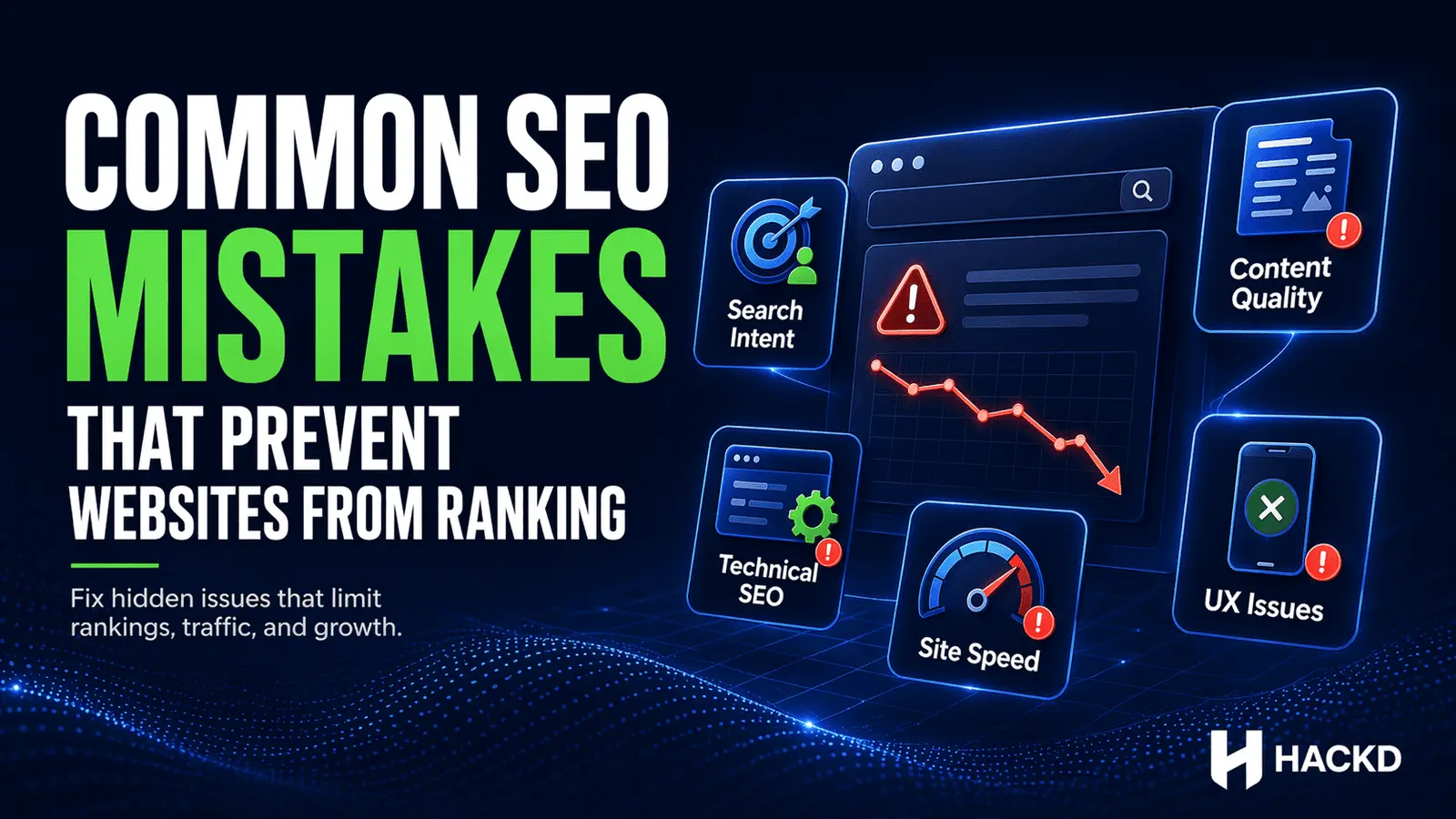
Many businesses invest time and resources into SEO but still struggle to achieve meaningful rankings. Despite publishing content and making updates, their websites remain buried in search results, missing out on valuable organic traffic.
The issue often lies in overlooked SEO mistakes that silently limit performance. From technical errors to poor content strategies, these issues prevent search engines from properly understanding and ranking your website.
In this guide, we break down the most common SEO mistakes that prevent websites from ranking and show you how to fix them to improve visibility and drive consistent organic growth.
Why SEO Mistakes Impact Rankings and Growth
Small SEO errors can create significant barriers to visibility and performance. These are the key reasons why mistakes directly impact rankings and long term growth.
- Reduced Search Visibility: When SEO mistakes exist, search engines struggle to understand and rank your content correctly, causing your pages to appear lower in results or not at all.
- Poor Indexing and Crawling: Technical issues such as broken links or incorrect indexing prevent search engines from properly accessing your pages, limiting how much of your content is visible in search results.
- Lower Content Relevance: Misaligned keywords and weak content reduce relevance, making it harder for search engines to match your pages with user queries and lowering your chances of ranking competitively.
- Decreased User Engagement: Poor user experience, slow loading times, and unclear structure lead to higher bounce rates, signalling to search engines that your content does not meet user expectations.
- Weakened Authority and Trust: Lack of backlinks, inconsistent information, and low-quality content reduce your website’s credibility, making it harder to compete against authoritative sites within your industry.
- Missed Traffic and Revenue Opportunities: SEO mistakes result in lost visibility and reduced traffic, which directly impacts lead generation, conversions, and overall business growth potential over time.
Core SEO Mistakes That Prevent Websites from Ranking
Ranking issues often stem from avoidable mistakes across technical, content, and strategic layers. Here are the core SEO mistakes that prevent websites from achieving strong, consistent visibility:
1. Ignoring Search Intent
Focusing only on keywords without understanding user intent leads to content that fails to meet expectations. Users leave quickly when content does not answer their query, increasing bounce rates.
Search engines prioritise relevance, so misaligned intent weakens rankings, reduces engagement, and limits your ability to compete effectively in search results.
2. Poor Keyword Targeting Strategy
Targeting overly competitive or irrelevant keywords reduces your chances of ranking and attracting qualified traffic.
Without proper research and keyword mapping, content becomes unfocused. This leads to low visibility, missed opportunities, and pages that fail to capture users actively searching for your services.
3. Thin or Low-Quality Content
Content that lacks depth, originality, or value struggles to rank in competitive search environments. Search engines favour detailed, helpful content that fully answers user queries.
Thin content reduces trust, limits engagement, and fails to establish authority, making it difficult to sustain long-term SEO performance.
4. Weak On-Page Optimisation
Missing or poorly structured titles, headings, and meta descriptions reduce clarity for both users and search engines.
Without proper keyword placement and content structure, pages lose relevance signals. This weakens visibility, lowers click-through rates, and limits your ability to rank for targeted search terms.
5. Technical SEO Issues
Slow page speed, crawl errors, broken links, and poor site architecture prevent search engines from properly accessing and indexing your content.
These technical barriers directly impact rankings and user experience, making it harder for your website to appear consistently in search results.
6. Lack of Backlinks and Authority
A weak backlink profile signals low credibility to search engines. Without high-quality links from relevant sources, your website struggles to build authority.
This makes it difficult to compete against established competitors and limits your ability to rank for competitive keywords.
7. Poor User Experience and Site Design
Websites that are slow, difficult to navigate, or not mobile-friendly lead to poor engagement. Users leave quickly when experiences are frustrating, sending negative signals to search engines.
Poor usability directly impacts rankings, conversions, and overall SEO performance.
Content-Related SEO Mistakes That Limit Performance
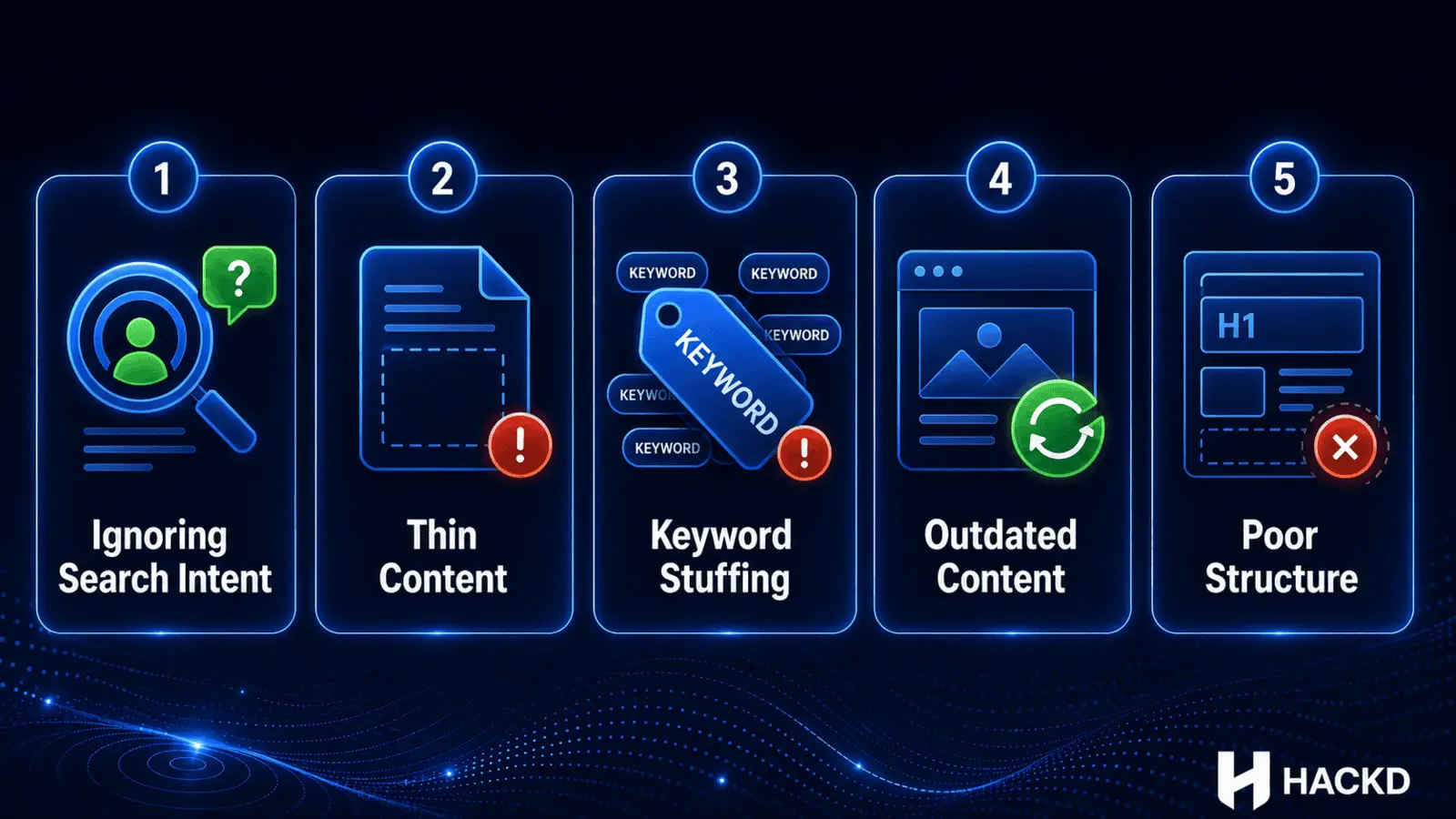
Content mistakes often weaken relevance and authority, making it harder for pages to rank and attract meaningful organic traffic. Here are key issues to address:
- Ignoring Search Intent: Content that does not align with user intent fails to satisfy queries, leading to low engagement, higher bounce rates, and reduced rankings across competitive search results.
- Publishing Thin Content: Shallow content lacks depth and value, making it difficult to compete. Search engines prioritise comprehensive content that fully answers user queries and demonstrates authority.
- Keyword Stuffing: Overusing keywords disrupts readability and signals manipulation. This reduces user experience and can negatively impact rankings, as search engines prioritise natural, well-written content.
- Not Updating Content: Outdated content loses relevance over time. Failing to refresh information reduces accuracy, weakens authority, and limits your ability to maintain strong rankings in evolving search landscapes.
- Lack of Content Structure: Poor formatting and unclear structure make content difficult to read and understand. This reduces engagement and weakens signals that search engines use to evaluate content quality.
Technical SEO Mistakes That Affect Visibility
Technical issues create barriers that prevent search engines from properly crawling, indexing, and ranking your website. Here are critical mistakes that impact visibility:
- Slow Page Speed: Pages that load slowly create poor user experiences and higher bounce rates. Search engines prioritise fast-loading websites, so speed issues can significantly reduce rankings and visibility.
- Crawlability Issues: Incorrect robots.txt settings or broken internal links prevent search engines from accessing important pages, limiting indexation and reducing overall search performance.
- Duplicate Content Problems: Duplicate pages confuse search engines about which version to rank, diluting authority and weakening overall visibility across search results.
- Improper Site Structure: Disorganised navigation and poor URL structures make it difficult for search engines to understand your website hierarchy, affecting crawl efficiency and rankings.
- Missing Technical Markup: Lack of structured data limits your chances of appearing in enhanced search results, reducing visibility and click-through opportunities.
On-Page SEO Mistakes That Reduce Rankings
On-page optimisation plays a direct role in how search engines interpret and rank your content. These common mistakes can limit performance:
- Missing Title Tags and Meta Descriptions: Without optimised metadata, search engines struggle to understand page relevance, and users are less likely to click on your results.
- Poor Heading Structure: Lack of clear H1, H2, and H3 usage reduces content clarity, making it harder for search engines to interpret hierarchy and relevance.
- Weak Keyword Placement: Failing to place keywords strategically within titles, headings, and content reduces relevance signals and limits ranking potential.
- No Internal Linking Strategy: Missing internal links reduces page authority flow and makes it harder for search engines to discover and rank important content.
- Unoptimised Images: Large file sizes and missing alt text affect page speed and accessibility, negatively impacting both user experience and SEO performance.
User Experience Mistakes That Affect SEO Performance

User experience directly influences engagement signals that search engines use to evaluate content quality. Here are the key mistakes that impact SEO:
- Poor Mobile Optimisation: Websites that are not mobile-friendly provide a poor experience, leading to lower rankings as search engines prioritise mobile-first indexing.
- Confusing Navigation: Difficult-to-use menus and unclear pathways reduce usability, making it harder for users to find information and increasing bounce rates.
- Intrusive Pop-Ups: Excessive or disruptive pop-ups frustrate users, negatively affecting engagement and sending poor signals to search engines.
- Slow Interaction Speed: Delays in page responsiveness reduce user satisfaction, impacting engagement metrics that influence rankings.
- Lack of Clear CTAs: Without clear calls to action, users may not engage further, reducing conversions and limiting overall site performance.
Common Local SEO Mistakes Businesses Make
Local SEO errors prevent businesses from appearing in location-based searches, limiting visibility among nearby customers. Here are key mistakes to avoid:
- Inconsistent NAP Information: Differences in name, address, and phone details across platforms confuse search engines, reducing trust and weakening local rankings.
- Unoptimised Google Business Profile: Incomplete or outdated profiles limit visibility in local search and map results, reducing opportunities to attract nearby customers.
- Ignoring Customer Reviews: Failing to collect or respond to reviews reduces credibility and weakens local ranking signals that influence trust and visibility.
- Lack of Local Keyword Targeting: Not using location-specific keywords limits your ability to rank for relevant local searches, reducing targeted traffic.
- Missing Local Citations: Lack of listings on relevant directories reduces authority and trust signals, making it harder to compete in local search results.
How to Identify and Fix SEO Mistakes
Identifying and fixing SEO mistakes requires a structured approach that uncovers issues and turns insights into measurable improvements. Here is how to systematically resolve SEO problems:
1. Conduct a Comprehensive SEO Audit
Start with a full audit to identify technical, on-page, and content issues affecting performance. Analyse crawl errors, page speed, keyword rankings, and site structure.
This provides a clear baseline, helping you prioritise high-impact fixes that directly influence visibility, user experience, and search engine rankings.
2. Analyse Search Performance Data
Review data from analytics and search platforms to understand how your website performs. Focus on traffic trends, keyword positions, click-through rates, and user behaviour.
Identifying patterns helps uncover underperforming pages and highlights opportunities for optimisation that can improve rankings and engagement.
3. Fix Technical SEO Issues First
Address technical problems such as crawl errors, broken links, slow loading speeds, and indexing issues. These errors create barriers for search engines and users.
Resolving them ensures your website is accessible, improving both crawlability and the foundation for better ranking performance.
4. Optimise On-Page Elements
Improve titles, meta descriptions, headings, and keyword placement to strengthen relevance signals. Ensure each page is clearly structured and aligned with search intent.
Strong on-page optimisation helps search engines understand your content while improving click-through rates and overall visibility.
5. Improve Content Quality and Depth
Enhance existing content by adding value, depth, and relevance. Address gaps in information, improve readability, and align content with user intent.
High-quality content increases engagement, builds authority, and improves your chances of ranking in competitive search results.
6. Strengthen Internal Linking and Site Structure
Create clear internal links to connect related pages and guide both users and search engines.
A well-structured site improves navigation, distributes authority, and ensures important pages are easily discovered and indexed.
7. Monitor, Test, and Continuously Improve
SEO is an ongoing process. Track performance after implementing changes, test different strategies, and refine your approach based on results.
Continuous optimisation ensures your website adapts to algorithm updates and maintains long-term growth.
Best Practices to Avoid SEO Mistakes Moving Forward
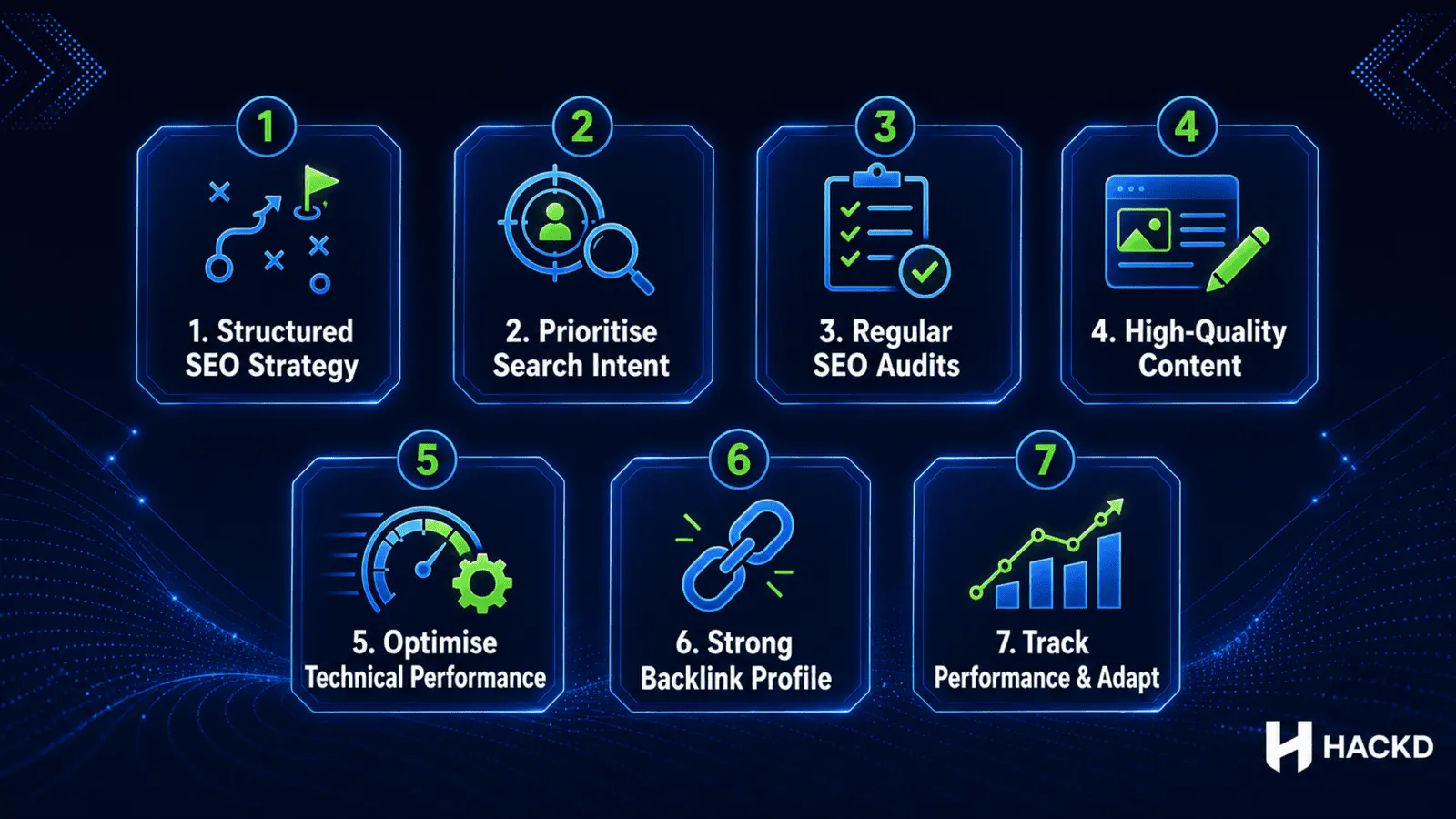
Avoiding SEO mistakes requires consistency, clarity, and a proactive strategy. These best practices help maintain strong performance and prevent common issues from limiting your growth:
- Follow a Structured SEO Strategy: Building a clear SEO plan aligned with business goals ensures consistency. A structured approach helps avoid random efforts, improves focus, and supports long-term growth through measurable and repeatable optimisation processes.
- Prioritise Search Intent in Content: Creating content based on user intent ensures relevance and engagement. Understanding what users are searching for helps produce content that satisfies queries, improves rankings, and increases overall visibility.
- Conduct Regular SEO Audits: Routine audits help identify issues early before they impact performance. Regular checks ensure your website remains optimised, technically sound, and aligned with current search engine requirements.
- Maintain High-Quality Content Standards: Producing valuable, well-structured, and informative content strengthens authority and trust. High-quality content improves engagement and helps your website remain competitive in search rankings.
- Optimise Technical Performance Continuously: Monitoring page speed, mobile usability, and crawlability ensures your website performs efficiently. Strong technical foundations improve user experience and support better search engine visibility.
- Build and Monitor a Strong Backlink Profile: Earning high-quality backlinks improves authority and credibility. Regularly reviewing your backlink profile ensures links remain relevant and beneficial for ranking performance.
- Track Performance and Adapt Strategy: Continuously monitoring SEO metrics allows you to refine your strategy. Data-driven decisions help improve results and ensure your SEO efforts remain effective over time.
Future Considerations: Avoiding SEO Mistakes in an AI-Driven Search Landscape
As search evolves with AI and automation, avoiding SEO mistakes requires adapting strategies to new technologies and changing user behaviour. These are key considerations for staying competitive:
- Optimise for AI-Driven Search Results: Search engines increasingly use AI to generate answers. Creating clear, structured, and authoritative content improves your chances of being featured in AI summaries and enhances overall visibility.
- Focus on Content Clarity and Context: AI systems prioritise content that is easy to interpret. Writing clear, well-structured content with strong context helps improve understanding, relevance, and ranking potential across evolving search experiences.
- Strengthen Topical Authority: Building content around specific topics improves credibility. AI-driven search rewards websites that demonstrate depth and expertise, making topical authority essential for sustained visibility.
- Adapt to Conversational Search Behaviour: Users are increasingly using natural language queries. Optimising content for conversational search improves alignment with how AI interprets and delivers search results.
- Leverage Structured Data and Schema Markup: Structured data helps search engines understand your content more effectively. Implementing schema improves visibility in enhanced search features and supports AI-driven result generation.
- Prioritise User Experience and Engagement: AI systems consider user interaction signals. Improving site usability, speed, and engagement helps strengthen rankings and ensures your content remains competitive in modern search environments.
- Continuously Update and Refine Content: Search trends evolve quickly in an AI-driven landscape. Regularly updating content ensures accuracy, maintains relevance, and improves your ability to compete in changing search conditions.
Fix SEO Mistakes and Unlock Rankings
SEO success often comes down to fixing what is holding your website back. Small mistakes in content, structure, or technical setup can limit visibility and prevent your pages from reaching their full potential.
By identifying and correcting these issues, you create a stronger foundation for rankings, traffic, and long-term growth. Consistent optimisation is what turns underperforming websites into reliable growth channels.
Partner with Hackd Growth to identify critical SEO mistakes, implement proven fixes, and transform your website into a high-performing asset that drives consistent organic results.
Frequently Asked Questions
1. Why is my website not ranking on Google?
Your website may not rank due to issues such as poor keyword targeting, weak content, technical errors, or a lack of backlinks. Identifying and fixing these factors is essential to improving visibility and search performance.
2. What are the most common SEO mistakes?
Common mistakes include ignoring search intent, using poor keyword strategies, having slow website performance, weak content, and not optimising technical elements such as site structure and crawlability.
3. How long does it take to fix SEO issues?
The time required depends on the severity of the issues. Some fixes show results within weeks, while others, such as content improvements and link building, may take several months to impact rankings.
4. Can SEO mistakes be reversed?
Yes, most SEO mistakes can be corrected with proper optimisation. Fixing technical issues, improving content, and aligning with search intent can help recover rankings and improve performance over time.
5. How often should I audit my website for SEO?
Regular audits should be conducted every few months to identify issues early. Ongoing monitoring ensures your website remains optimised and aligned with changing search engine requirements.
6. What tools help identify SEO problems?
SEO audit tools, analytics platforms, and search performance tools help identify technical issues, keyword performance, and user behaviour, allowing you to make informed improvements.

.jpg.webp)