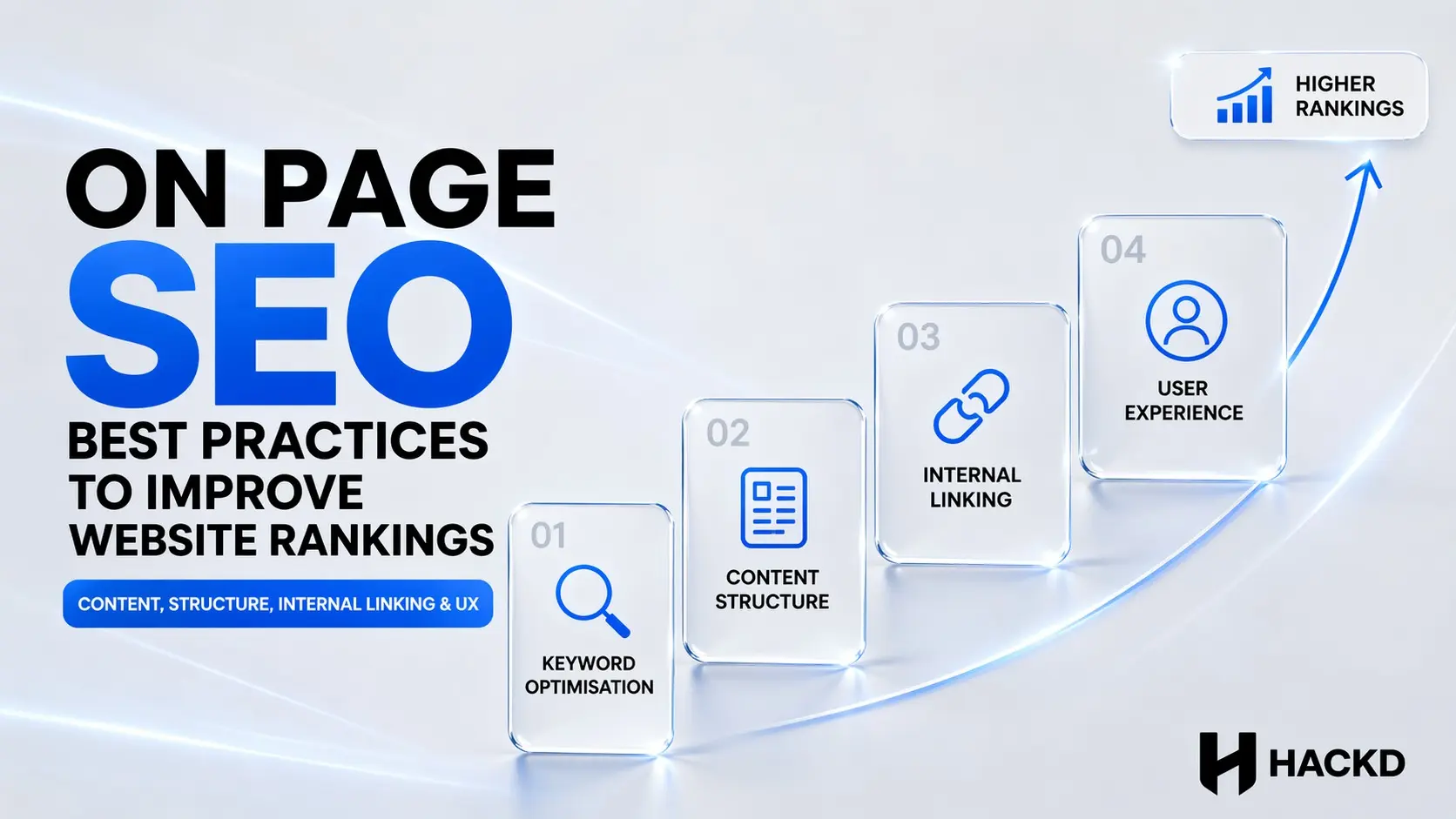
On-page SEO remains a core driver of search visibility, helping websites rank higher and attract qualified traffic. It aligns content, structure, and user intent to improve how pages perform in search results.
Effective on-page SEO ensures each page is optimised for relevance and usability. From keyword targeting to content structure, every element works together to signal value to search engines and users.
In this guide, we cover the most important on-page SEO best practices, including content optimisation, page structure, internal linking, and user experience strategies to improve rankings, increase traffic, and drive more conversions.
What Is On-Page SEO?
On-page SEO refers to the process of optimising individual web pages to improve search rankings and enhance user experience. It focuses on elements such as content quality, keyword usage, page structure, and HTML tags to ensure pages are relevant and easy for search engines to understand.
By aligning content with user intent and organising information clearly, on-page SEO helps search engines determine what a page is about and how valuable it is for specific queries. This directly influences visibility and ranking potential.
On-page SEO works alongside technical and off-page SEO within a broader growth system. While technical SEO ensures accessibility and performance, and off-page SEO builds authority, on-page SEO drives relevance, engagement, and conversions.
Core On-Page SEO Best Practices That Improve Rankings
These are the core on-page SEO best practices that improve relevance, structure, and user experience, helping pages rank higher, attract qualified traffic, and drive consistent performance.
1. Relevance and Search Intent Optimisation
Effective on-page SEO begins with aligning content to search intent. This involves researching high-intent keywords, mapping them to specific pages, and ensuring content matches informational, commercial, or transactional queries to improve relevance, visibility, and ranking potential.
2. Content Quality and Topical Depth
High-quality content that fully addresses user needs improves engagement and rankings. Covering topics in depth, maintaining clarity, integrating keywords naturally, and keeping content updated ensure pages remain relevant, valuable, and competitive in search results.
3. Page Structure and HTML Optimisation
Optimising page elements such as title tags, meta descriptions, URLs, and heading structure improves clarity for both users and search engines. Well-structured HTML helps search engines understand content hierarchy while improving click-through rates and overall usability.
4. Internal Linking and Topical Authority
Strategic internal linking connects related pages, improving crawlability and distributing authority across the website. Using descriptive anchor text and building topic clusters strengthens relevance, helping search engines understand your site and rank key pages more effectively.
5. Media and Asset Optimisation
Optimising images and media improves both performance and SEO. Using compressed formats, adding descriptive alt text, and placing media strategically enhances content value while maintaining fast load times and improving accessibility for both users and search engines.
6. User Experience and Page Performance
User experience plays a key role in on-page SEO success. Fast loading pages, mobile-friendly design, and clean layouts improve readability, reduce friction, and increase engagement, all of which contribute to stronger rankings and better overall performance.
7. Structured Data and SERP Enhancements
Implementing structured data helps search engines interpret content more effectively. Schema markup enables enhanced search listings such as rich results, improving visibility, increasing click-through rates, and making pages more competitive within search engine results.
8. Technical Elements Supporting On-Page SEO
Technical factors such as crawlability, indexability, canonical tags, and site architecture support on-page SEO performance. Ensuring pages are accessible, free from duplication issues, and logically structured helps maximise visibility and ranking potential.
How On-Page SEO Drives Rankings, Traffic, and Conversions
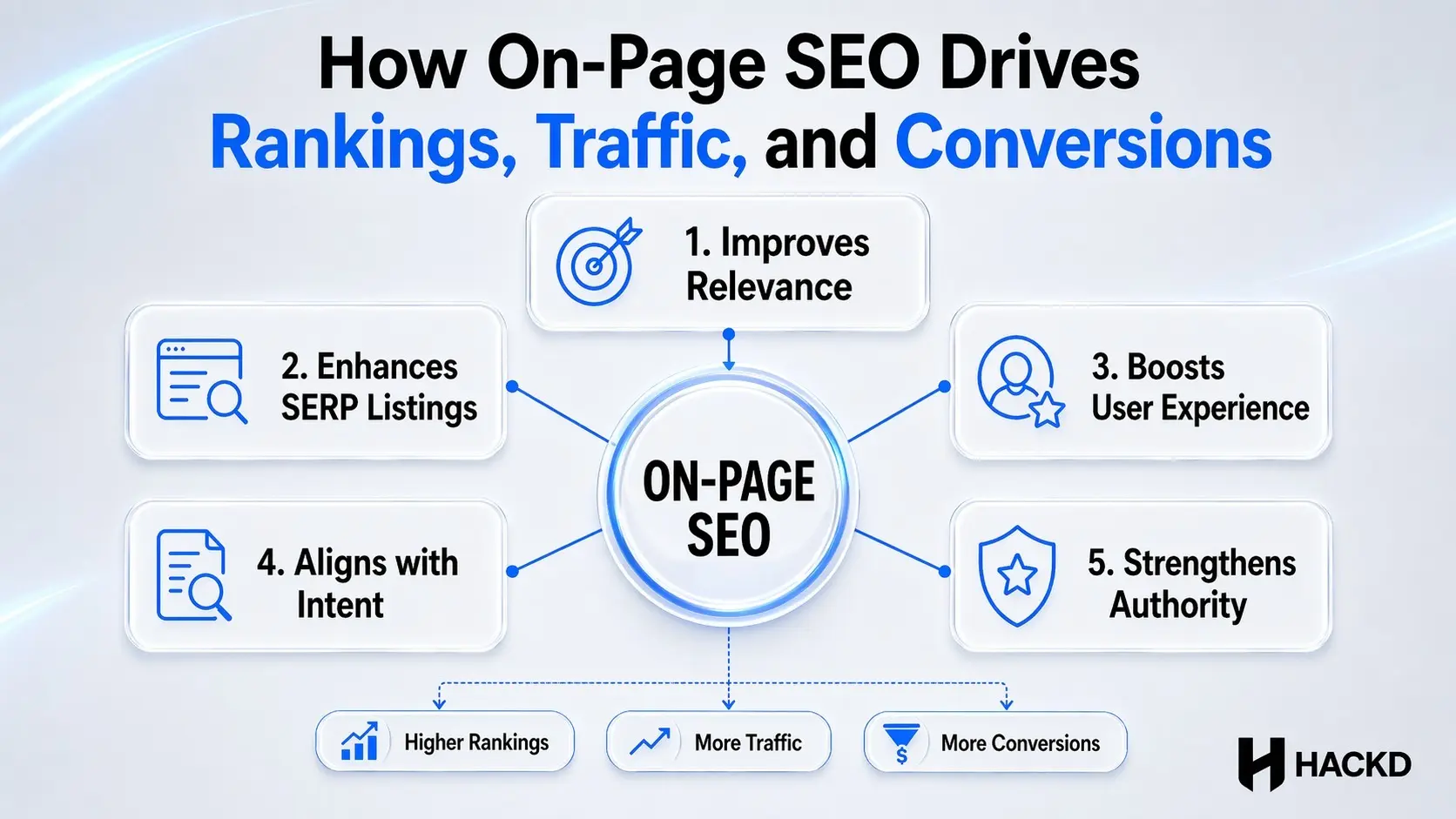
On-page SEO directly influences how content performs in search by improving relevance, visibility, and user experience. These are the key ways it drives rankings, traffic, and conversions.
1. Improves Relevance to Increase Rankings
On-page SEO aligns content with targeted keywords and user intent, helping search engines understand what a page is about. Strong relevance improves ranking potential, allowing pages to appear higher for queries that match user needs and search behaviour.
2. Enhances SERP Listings to Increase Click Through Rates
Optimised title tags, meta descriptions, and structured data improve how pages appear in search results. More compelling and informative listings attract attention, increase click-through rates, and drive more qualified traffic to the website.
3. Improves User Experience to Boost Engagement
Clear structure, readable content, and intuitive navigation create better user experiences. When users find content easy to consume and interact with, they stay longer, engage more, and send positive signals that support stronger rankings.
4. Aligns Content with Intent to Increase Conversions
Matching content to user intent ensures visitors find exactly what they are looking for. This reduces friction, improves satisfaction, and increases the likelihood of users completing actions such as enquiries, purchases, or sign-ups.
5. Strengthens Content Authority for Sustainable Growth
Consistent optimisation across pages builds topical authority over time. Strong content depth, internal linking, and keyword relevance help establish trust with search engines, supporting long-term rankings, increased visibility, and scalable organic traffic growth.
How On-Page SEO Fits Into a Growth System
On-page SEO plays a central role in driving visibility, engagement, and conversions by aligning content with user intent and business goals. These are the key ways it fits into a growth system.
1. Supports Organic Traffic Acquisition
On-page SEO improves how pages rank for relevant keywords, helping attract qualified traffic from search engines. Strong optimisation increases visibility, ensuring content reaches users actively searching for related products, services, or information.
2. Enhances Conversion Rate Optimisation
Well-optimised pages guide users through clear journeys that encourage action. By aligning content with intent and improving usability, on-page SEO increases the likelihood of conversions, turning traffic into leads, enquiries, or sales.
3. Strengthens Overall SEO Strategy
On-page SEO works alongside technical and off-page SEO to create a complete growth system. It ensures content is relevant and structured correctly, allowing other SEO efforts to perform more effectively and deliver stronger results.
4. Builds Topical Authority and Relevance
Consistent optimisation across related pages helps establish authority around key topics. This strengthens relevance in search engines, improving the ability to rank for multiple keywords and increasing overall visibility within a niche.
5. Enables Scalable and Sustainable Growth
On-page SEO creates a repeatable framework for optimising new content and pages. This allows businesses to scale their content strategy efficiently while maintaining consistent performance, supporting long-term organic growth and digital success.
Measuring On-Page SEO Performance
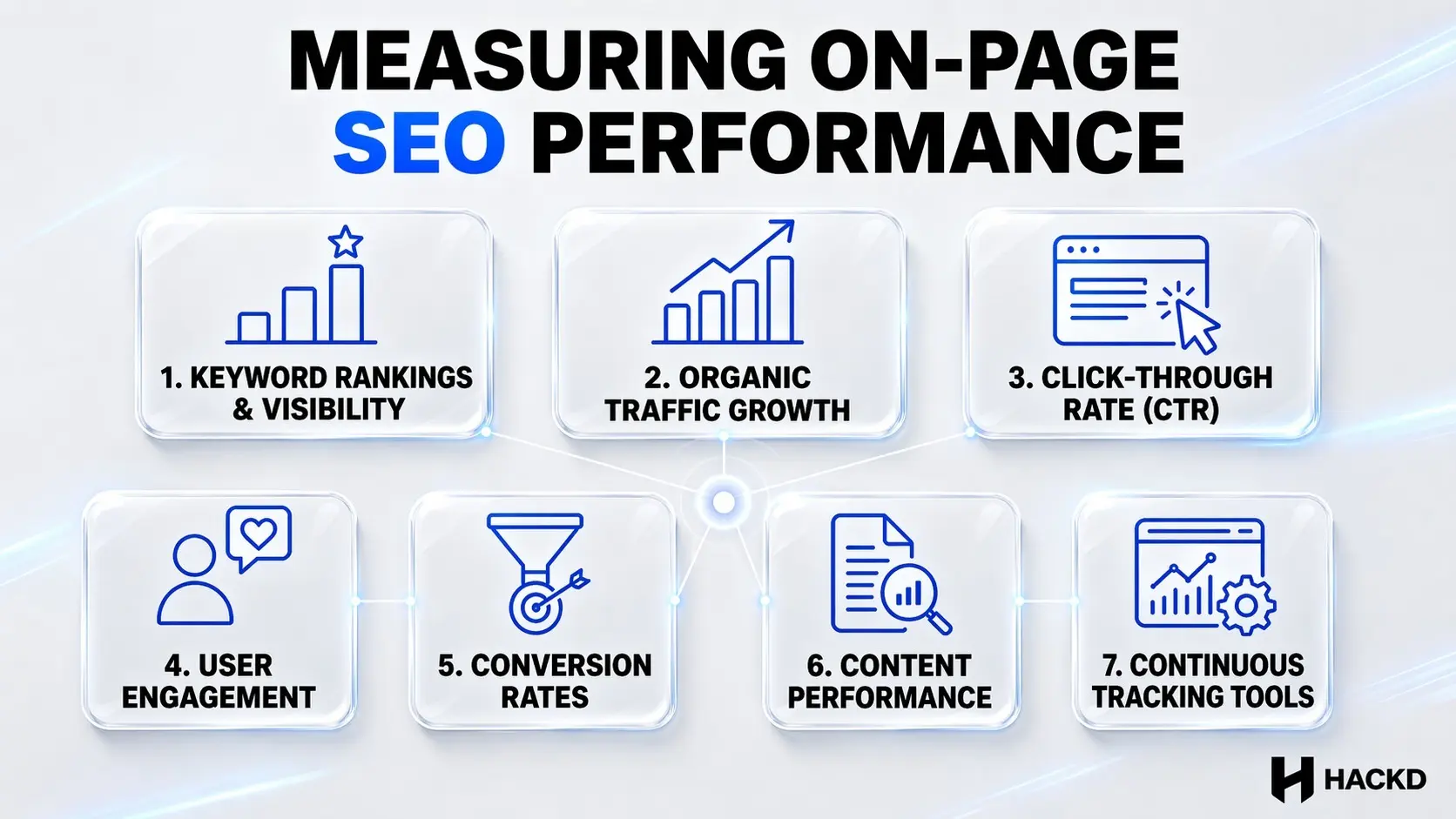
Tracking on-page SEO performance helps identify what is working, where improvements are needed, and how optimisation efforts impact rankings, traffic, and conversions.
- Track keyword rankings and visibility: Monitor how pages rank for target keywords across search results. Changes in rankings indicate the effectiveness of on page optimisation and help identify opportunities to improve relevance and search performance.
- Measure organic traffic growth: Analyse increases or declines in organic traffic to understand how well pages attract users from search engines. Traffic trends reflect overall visibility and the impact of optimisation strategies over time.
- Evaluate click-through rates CTR: Review how often users click on your pages from search results. Strong CTR indicates effective title tags and meta descriptions, while low CTR highlights opportunities to improve search listing appeal.
- Analyse user engagement metrics: Track metrics such as bounce rate, time on page, and pages per session. Higher engagement signals that content is relevant and valuable, supporting stronger rankings and improved user experience.
- Monitor conversion rates and actions: Measure how well pages convert visitors into leads, enquiries, or sales. Conversion data shows whether content aligns with intent and effectively guides users towards desired actions.
- Assess content performance and depth: Review which pages perform best in terms of traffic, rankings, and engagement. This helps identify high-performing content and opportunities to improve weaker pages for better results.
- Use tools for continuous performance tracking: Leverage tools such as Google Search Console, Google Analytics, and SEO platforms to monitor data consistently, identify issues early, and refine on-page SEO strategies for sustained growth.
How to Prioritise On-Page SEO Improvements
Prioritising on-page SEO improvements ensures resources focus on changes that deliver the highest impact on rankings, traffic, and conversions. These are the key approaches to prioritise effectively.
1. Start with High Impact Low Effort Fixes
Begin by addressing quick wins such as optimising title tags, meta descriptions, headings, and internal links. These changes are easy to implement and can deliver immediate improvements in visibility, click-through rates, and overall search performance.
2. Optimise Core Pages Before Scaling
Focus on high-value pages such as service pages, product pages, and key landing pages first. Improving these pages ensures stronger performance where it matters most, maximising traffic, conversions, and overall business impact before expanding efforts.
3. Focus on Content and Search Intent First
Ensure content aligns with user intent and fully answers search queries. Prioritising relevance and depth improves engagement, reduces bounce rates, and increases the likelihood of ranking higher for targeted keywords and converting visitors effectively.
4. Improve Structure and Internal Linking
Strengthening page structure and internal linking improves crawlability and authority distribution. Clear navigation, logical hierarchy, and strategic linking help search engines understand content relationships while guiding users through the website more effectively.
5. Continuously Test and Improve Performance
On-page SEO is not a one-time task. Regular testing, analysis, and updates help identify what works and what needs improvement, ensuring ongoing optimisation supports sustained rankings, better engagement, and long-term growth.
Common On-Page SEO Mistakes to Avoid
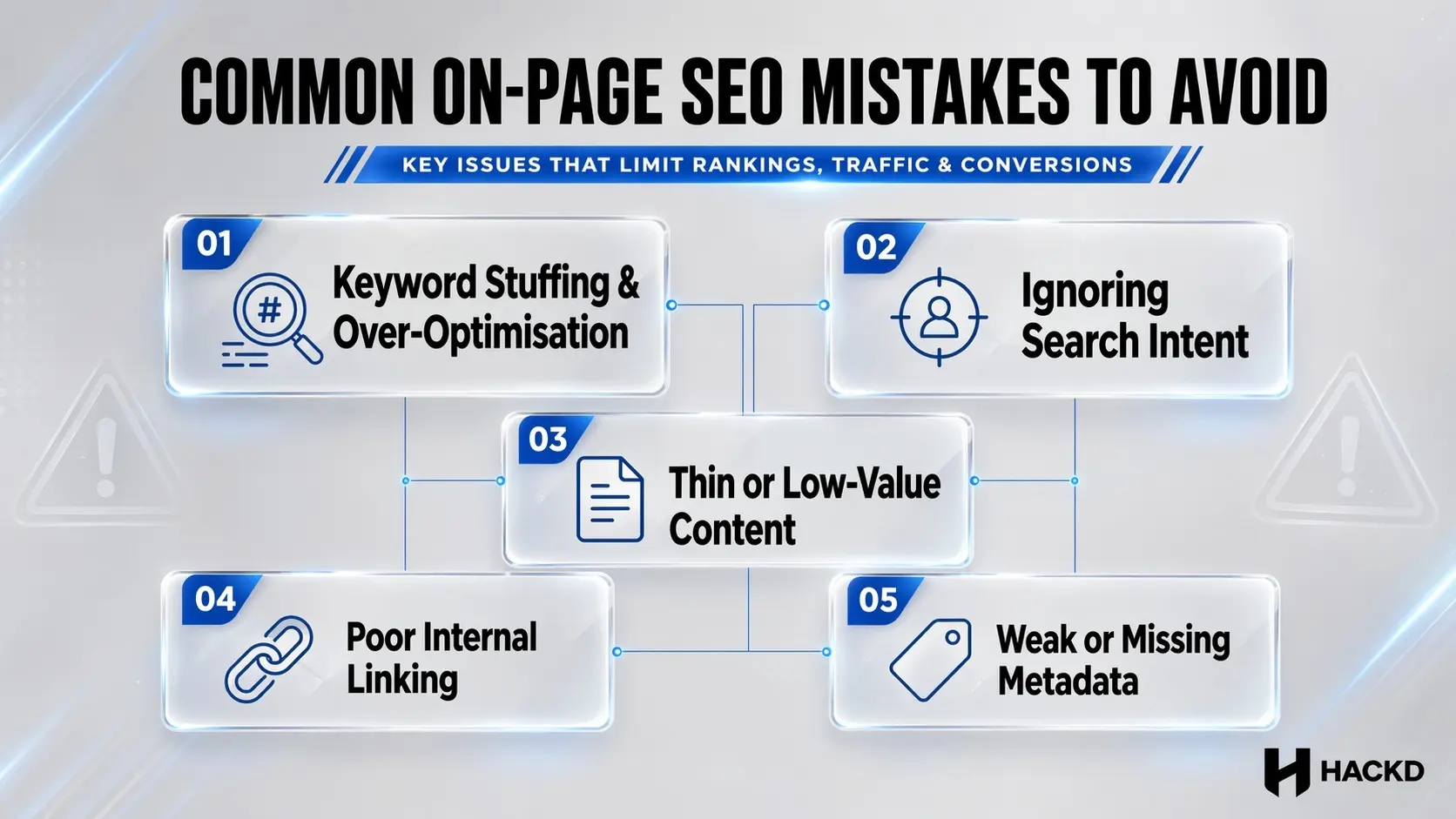
Avoiding common on-page SEO mistakes helps maintain strong relevance, usability, and search performance. These are the key issues that often limit rankings, traffic, and conversions.
- Keyword stuffing and over-optimisation: Overusing keywords reduces readability and can trigger search engine penalties, making content less effective for users while weakening its ability to rank naturally and sustainably.
- Ignoring search intent and user needs: Creating content that does not match user intent leads to poor engagement, higher bounce rates, and lower rankings, as search engines prioritise pages that best satisfy user queries.
- Thin or low-value content: Pages with limited information or shallow coverage fail to provide value, reducing engagement and making it difficult for search engines to rank them competitively against more comprehensive content.
- Poor internal linking structure: Weak or missing internal links limit crawlability and reduce the flow of authority across pages, making it harder for search engines to understand relationships and rank important content effectively.
- Weak or missing metadata: Missing or poorly written title tags and meta descriptions reduce click-through rates and visibility, limiting the ability of pages to attract traffic even when they appear in search results.
Build High-Performing Pages That Rank and Convert
On-page SEO remains a fundamental driver of search visibility, helping businesses align content, structure, and user intent to achieve stronger rankings and meaningful engagement. It ensures every page contributes to overall performance.
As competition increases, continuous optimisation becomes essential. Regular updates, content improvements, and structure refinements help maintain relevance, improve user experience, and support consistent growth across search channels.
Prioritising on-page SEO creates scalable systems that drive traffic and conversions. Work with Hackd Growth to build optimised pages that rank higher, attract qualified users, and deliver measurable business results.
FAQs
1. Why is on-page SEO important for rankings
On-page SEO ensures content is relevant, structured, and aligned with user intent. This helps search engines understand pages better, improving rankings, visibility, and the ability to attract qualified organic traffic.
2. How do I optimise a page for SEO
Optimising a page involves targeting relevant keywords, improving content quality, structuring headings, enhancing metadata, and ensuring strong internal linking, all while aligning content with user intent and experience.
3. What are the most important on-page SEO factors
Key factors include keyword relevance, content quality, page structure, metadata, internal linking, user experience, and performance, all of which influence how effectively a page ranks and engages users.
4. How long does on-page SEO take to work
On-page SEO results vary depending on competition and existing performance, but improvements can be seen within weeks to months as search engines re-crawl pages and adjust rankings.
5. Can on-page SEO improve conversions
On-page SEO improves conversions by aligning content with user intent, enhancing usability, and guiding users through clear journeys, making it easier for them to take action and complete desired outcomes.

.jpg.webp)